



Offenbach's Die RheinnixenGothic Opera, Battersea Arts Centre, October 30-November 2, 2025 Russell Burdekin,
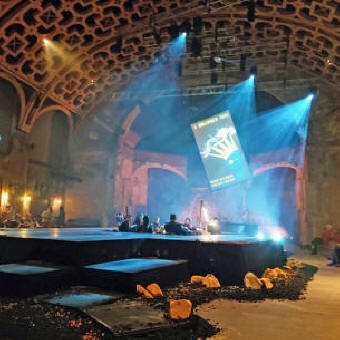
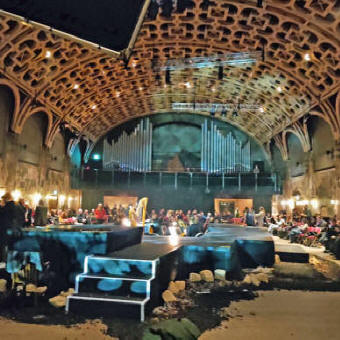
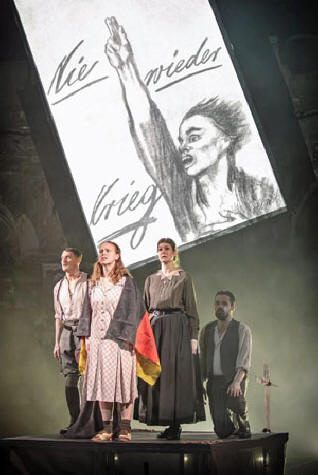
October 30, 2025 For the past seven years, London based Gothic Opera have staged a gothic themed opera around Halloween weekend. Last year they gave an outstanding production of Donizetti’s Maria di Rudenz. This year they turned their attention to Offenbach’s Die Rheinnixen to give its first staged performance in Britain. Premiered in 1864, the opera is a rather odd concoction with a fairly standard opera plot at its heart of deserted mother and daughter attacked or ignored by their unsuspecting partners until all comes right in the end with the family reestablished and whole. Perhaps inspired by the political movements in Germany at that time, Offenbach unconvincingly grafted on broader parallels with German’s aspirations for unity as well as reaching back into German romanticism. The latter ideas were some time past the heyday of Weber and Marschner and, in any case, one has to wonder how much sympathy its libretto’s creator, the Frenchman Charles Nuitter, had for those deeply German sentiments. The resulting libretto was in some ways closer to the political grand opera of Meyerbeer and Halévy, albeit on a smaller scale, with the Rhine and its nixies (sprites or fairies) arbitrarily added and dragged occasionally into the action. Essentially they could have been dispensed with. At the same time, their shadowy presence undermined the dramatic possibilities of the “real world” plot. The opera was set in the Rhineland in the Peasants War of the first half of the 1520s. Armgard is pining for her lost love, Franz, who is part of a mercenary band who are now threatening her home. However, he has been injured and no longer knows who he is or what is happening. The band is led by Conrad, who years before tricked Hedwig, Armgard’s mother, into marriage and then left her for her later to give birth to Armgard. She has not told Armgard this history and neither Conrad or Armgard are aware of their relationship. Conrad forces Armgard to sing and the stress apparently kills her. They all then make their way for different reasons to the elfstone, centre of the fairy kingdom, which, in a not entirely clear way, brings about the revival of Armgard and Franz and their relationsship that eventually then leads to the reconciliation of Hedwig and Conrad. The group, no longer led by Conrad, are then threatened by the marauding band but the fairies lead them off to their destruction. The opera ends with a plea for a united, peaceful, Germany.
If the result was not perhaps quite as successful as last year it was not for lack of commitment, imagination or musical excellence but rather in the opera itself. |