



Beethoven's
Leonore and
|
Russell Burdekin saw the productions of the first two operas on July 19 and 20:
|
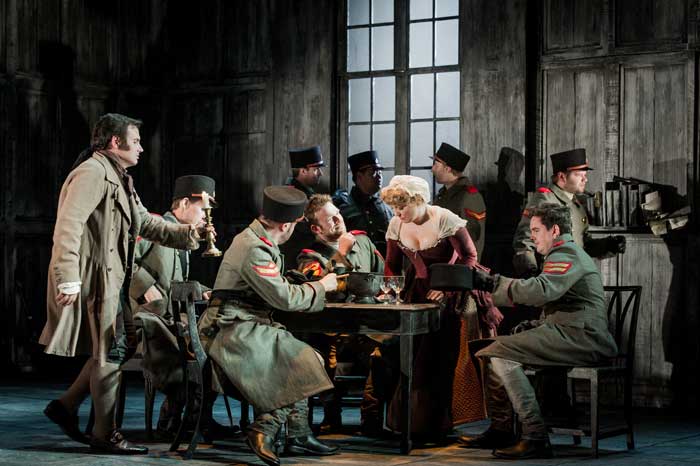
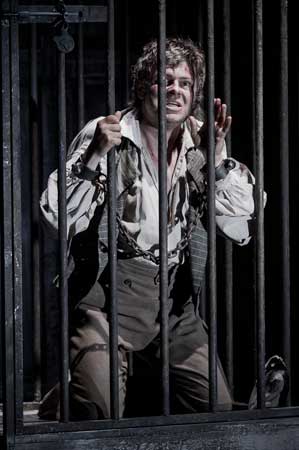
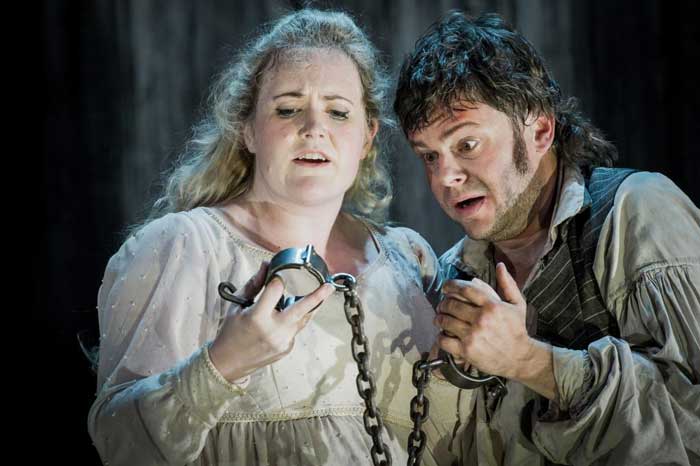
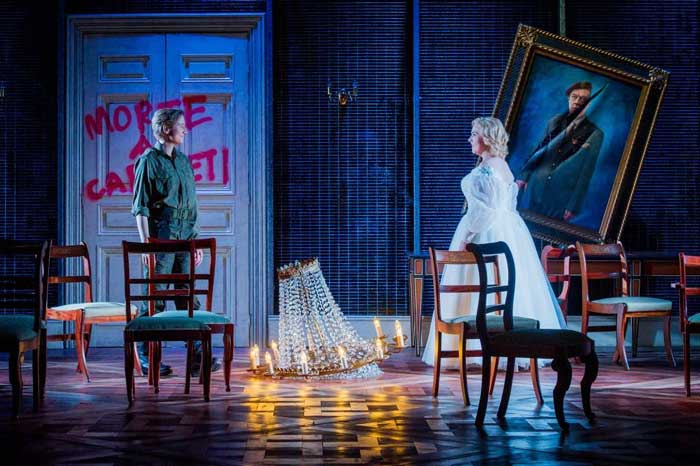
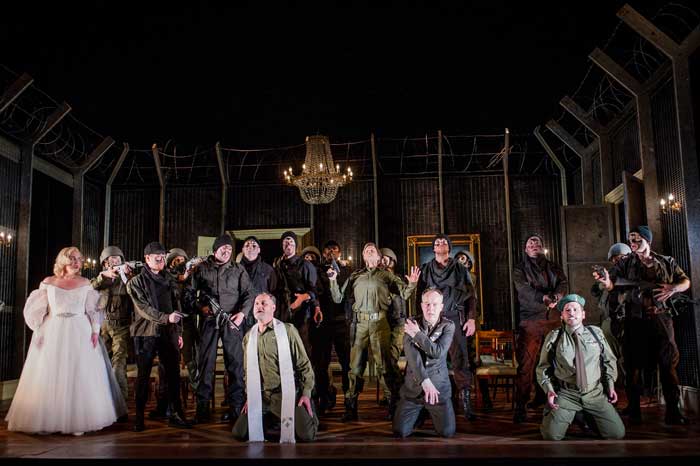
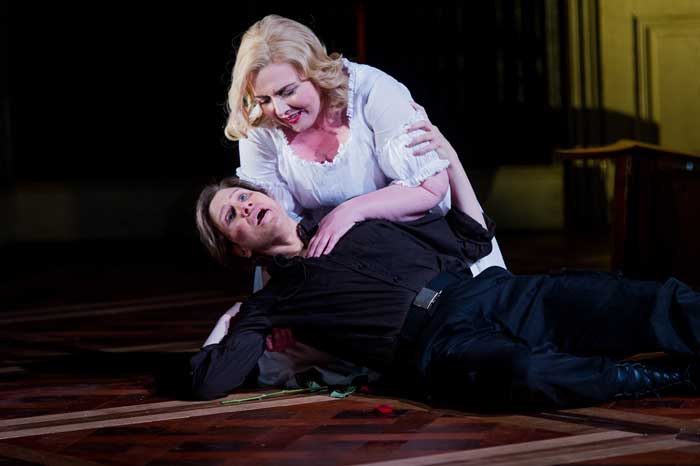
While much of the music of Leonore was familiar, the opera had a very different character broadening out the initial domestic situation with Marzelline, Rocco and Jacquino, which was treated rather sketchily in the later version. Similarly the main characters, Leonore and Florestan, are also treated more discursively including a long scene in which they believe they are about to be put to death. I doubt that many people regret that Beethoven spent more time on the opera sharpening and focusing more clearly on his theme of freedom and conjugal love but it is interesting once in a while to see this early version and understand how his ideas changed as well as enjoying some fine music that was later discarded. The staging with its single set proved sufficiently versatile and the direction by Stephen Medcalf was mainly clear and straightforward, although I could have done without the rather extended episode during the overture that mimed Beethoven's reaction to the opera's initial failure. Kirsten Sharpin and David Danholt gave a good account as the main couple and the opera gave the chance for hearing much more of the excellent Marzelline, Kristy Swift, including a lovely duet with Leonore that was cut in the later version. The other parts were also well taken, although the Don Pizarro of Hrólfur Sæmundsson had an element of caricature about him, as if he wasn't sure whether to play the role as comic or menacing. Buxton's investment in an extra male chorus was well judged not only by giving greater depth to the sound but by convincingly populating the stage. I was particularly looking forward to see how Harry Fehr would handle the direction of I Capuleti e i Montecchi as he has done some excellent work with New Sussex Opera. In general, I was not disappointed with what was again a clear rolling out of the action, although I felt Capellio's explicit knifing of Giulietta at the end ill judged even if implicitly he is responsible for her death. Again, the single set worked well with the razor wire on top of the room walls a constant reminder of the conflict. The Romeo of Stephanie Marshall was notable not just for her singing but for her stylish acting and she was well matched by Sarah-Jane Brandon. One welcome revelation was the Tebaldo of Luis Gomes and it would be good to hear him in other bel canto works. Unfortunately, the extra male chorus was dispensed with and it showed both in sound and in stage effect, which was not helped by using the female chorus as rather unconvincing extra soldiers. Justin Doyle conducted an excellent, light, flowing and responsive account of the score. I was sorry to see that the Buxton audience has started the silly habit of booing the baddie. Surely, a well sung and convincing role deserves proper recognition and I'm sure that singers, although forced to put a brave face on things, would prefer genuine applause than being treated as if it were a pantomime. However, carp notwithstanding, altogether two outstanding productions.
|
|
****************** |
The Team
|
Leonore
Leonore - Kirstin Sharpin Florestan - David Danholt Rocco - Scott Wilde Marzelline - Kristy Swift Jacquino - Stuart Laing Don Pizarro - Hrólfur Sæmundsson Don Fernando - Jonathan Best
Conductor - Stephen Barlow Director - Stephen Medcalf Designer - Francis O'Connor Lighting - Simon Corder |
I Capuleti e i Montecchi
Romeo - Stephanie Marshall Giulietta - Sarah-Jane Brandon Tebaldo - Luis Gomes Lozenzo - Julian Tovey Capellio - Jonathan Best
Conductor - Justin Doyle Director - Harry Fehr Designer - Yannis Thavoris Lighting - Simon Corder
|
|
© Robert Workman Jacquino, Marzelline and soldiers
© Robert Workman Florestan
© Robert Workman Leonore and Florestan
© Robert Workman Romeo and Giulietta
© Robert Workman Giulietta, Lorenzo, Capellio and Tebaldo
© Robert Workman Romeo and Giulietta
|