|
|
|
|
|
|
|
|
|
|
Rossini's Guillaume TellRoyal Opera House, Covent Garden, June 29 - July 17, 2015Photographs by Clive Barda, courtesy of the Royal Opera House
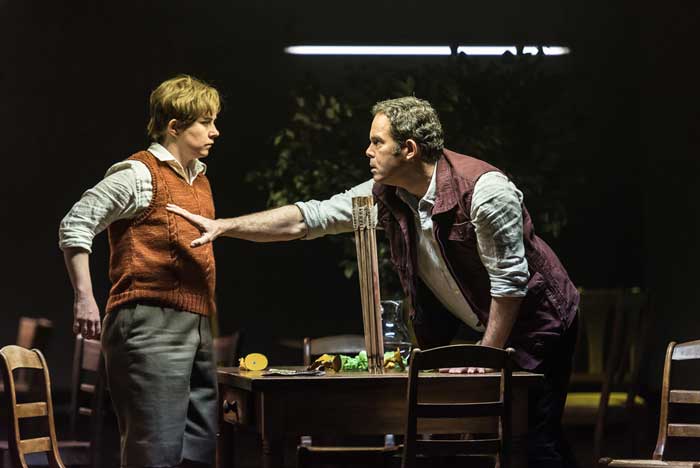
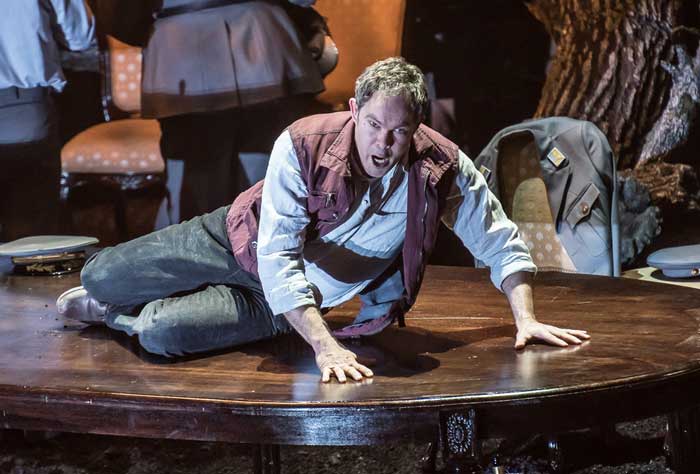
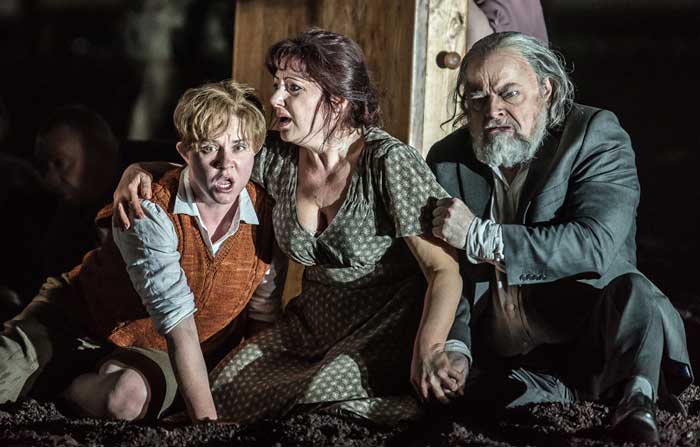
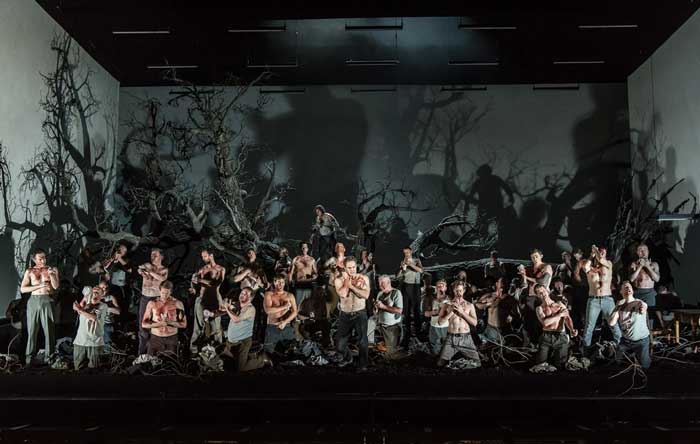
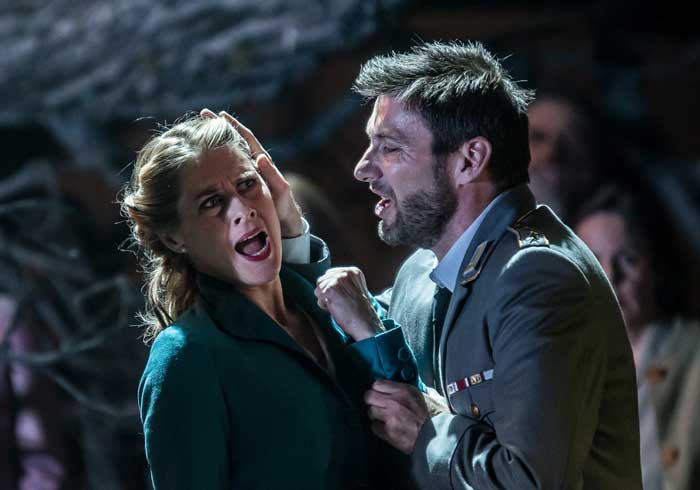
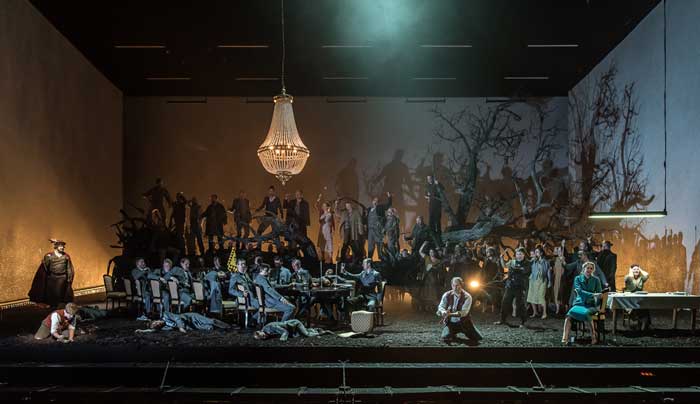
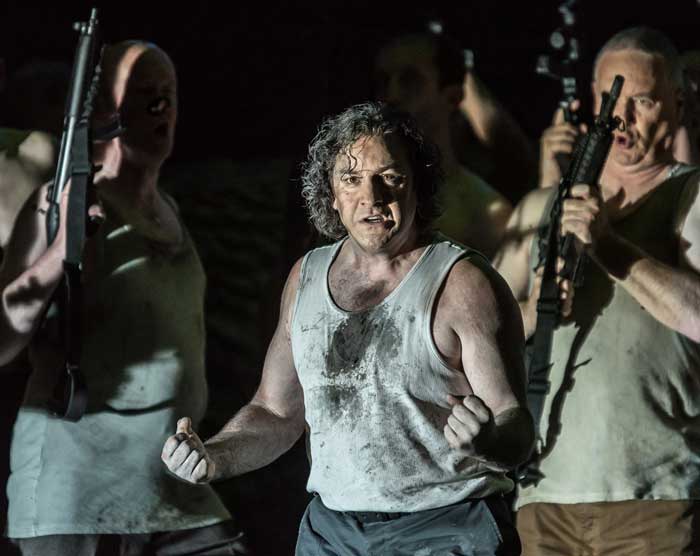
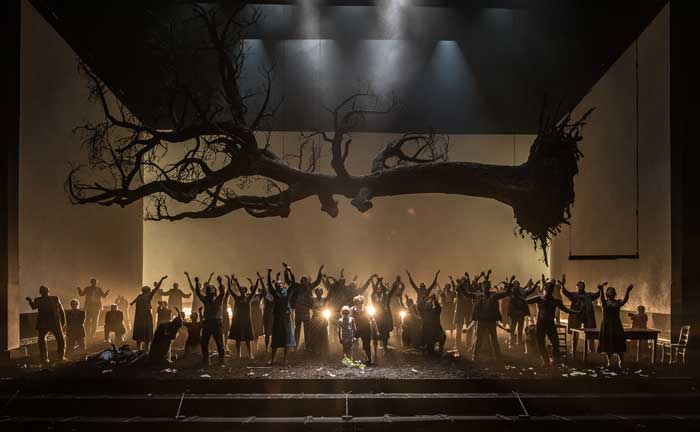
The Royal Opera kicked up quite a storm with this production and its much discussed rape scene that drew sustained booing mid performance."Lame and pretentious" wrote Rupert Christiansen in the Telegraph (June 30, 2015), while championing the musical side. Richard Fairman in the Financial Times (June 30, 2015) was of much the same opinion, "Rossini’s music soars under Antonio Pappano’s baton — but the production is unengaging". This new staging, conducted by Antonio Pappano and directed by Damiano Michieletto, has caused something of a rumpus thanks to an extended and violent rape scene in the ballet music of Act III, at the point where, according to the libretto, the Austrian soldiers force the Swiss women to dance with them. At the first night, this provoked booing that continued even once the singing restarted. Though the opera house issued statements defending the production, this scene was toned down for later performances. In the one I saw it was still very brutal. The staging made not only the arts pages of our national newspapers, but the news pages and correspondence columns too. Those who have seen Michieletto’s work before won’t be surprised to know that the original settings are jettisoned in favour of an updating to roughly First World War time with the William Tell story being seen through the eyes of young Jemmy as he reads the legend in a comic book. The libretto and Rossini’s stage directions are sometimes ignored as Michieletto portrays the brutality that so often occurs when one nation is occupied by a foreign army. Some critics have found his production relevant and powerful, but the majority have condemned it as cliché-ridden and the rape scene as gratuitous. I agree with the majority. The trouble for me is that Guillaume Tell contains a lot of pastoral, proto-romantic music that is contradicted by the production. This regietheater approach of course happens in many opera productions these days and I like it less and less the more I see of it. Here there were no couples getting married in Act I (what the celebration was eluded me), Melchtal is murdered onstage in front of everyone at the end of this act, and the three groups of patriots that arrive separately in Act II scene ii neither arrived (they were already there) nor were they separate (they were there in one block from the start). There were a number of “ideas” throughout the evening, the worst of which was the appearance of Hedwige (Tell’s wife) setting the kitchen table during that moment of stillness at the core of the opera, Tell’s aria “Sois immobile” when he urges his son not to move in the scene of the shooting of the apple – simply distracting and crass. And his ending, a young boy planting a tree sapling as a symbol of hope and rebirth, simply misses the grandeur of Rossini’s sunrise music. One wonders if the director truly hears the music Musically standards were generally very high. Gerald Finley in the title role was superb, really eloquent in the aria just mentioned. John Osborn coped tirelessly with the demands of Arnold – all the top Cs securely in place, and we were given both verses of the Act IV cabaletta. Of the principals, only the Mathilde of Malin Byström disappointed me – the voice itself is nothing special (I know we all “hear” voices differently, and others will disagree) and she skated over the coloratura (admittedly that of her Act III aria is fearsome). There was great playing and singing from the Covent Garden orchestra and chorus. There was some booing at this performance too. I have now seen four of Signor Michieletto’s opera productions. He returns to Covent Garden for Cavalleria rusticana and I pagliacci this winter, but I haven’t booked. Basta! A further review by Society member Jorge Binaghi (in Italian) can be found on the Bellini News site.
The Team
Guillaume Tell - Gerald Finley Arnold Melcthal - John Osborn Mathilde - Malin Byström Walter Furst - Alexander Vinogradov Jemmy - Sofia Fomina Hedwige - Enkelejda Shkosa Gesler - Nicolas Courjal Melcthal - Eric Halfvarson Rodolphe - Michael Colvin Leuthold-Samuel Dale Johnson Ruodi - Enea Scala
Conductor – Antonio Pappano Director - Damiano Michieletto Set designs - Paolo Fantin Costume designs - Carla Teti Lighting design - Alessandro Carletti
Royal Opera Orchestra and Chorus
© Clive Barda Jemmy and Guillaume Tell
© Clive Barda Guillaume Tell
© Clive Barda Jemmy, Hedwige and Melcthal
© Clive Barda Guillaume Tell and chorus
© Clive Barda Mathilde and Gesler
© Clive Barda General scene with the principles
© Clive Barda Arnold
© Clive Barda General scene
|
|
|
|
|
|
Page last updated: July 26, 2015
|