|
|
|
|
|
|
|
|
|
|
Auber's La Muette de PorticiOpéra Comique, Salle Favart, Paris, April 5 - 15, 2012.Photographs by E. Carecchio, courtesy of the Opéra Comique, Paris.
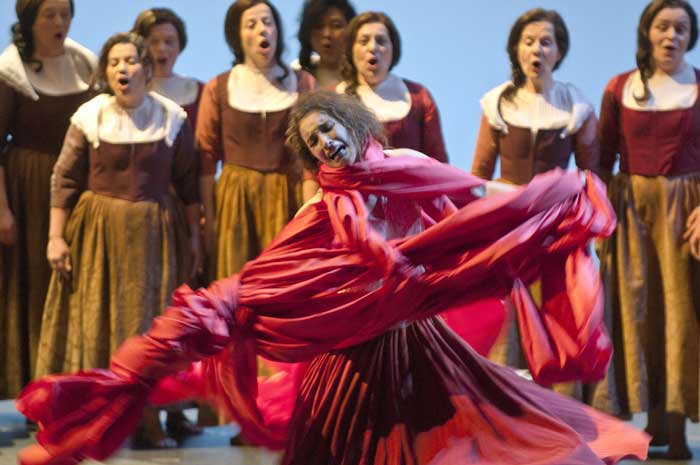
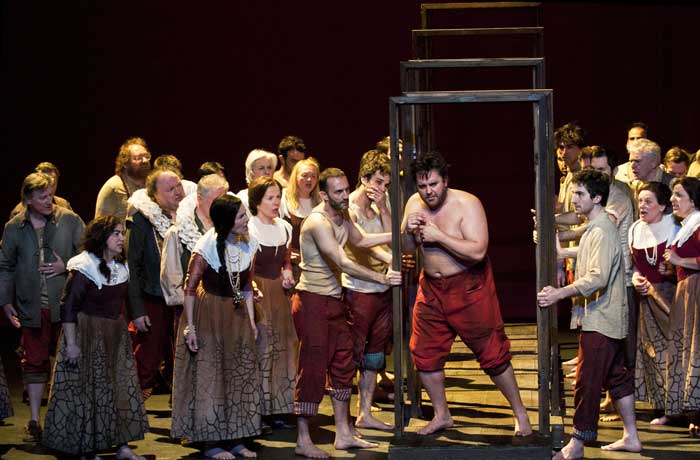
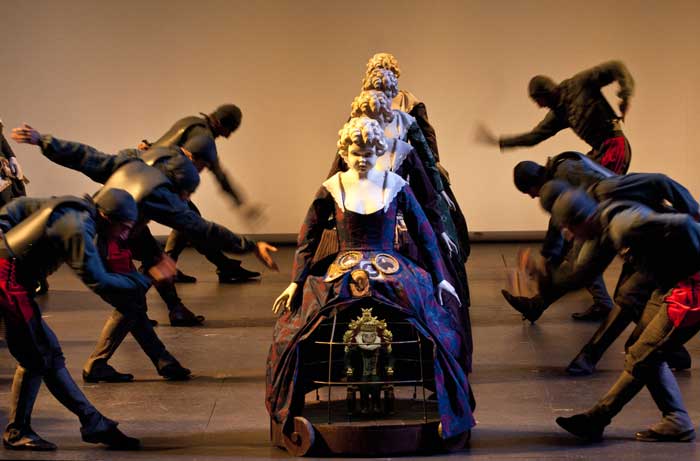
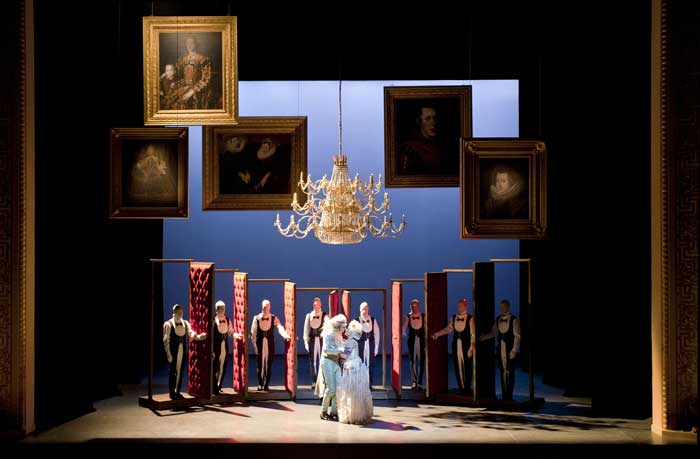
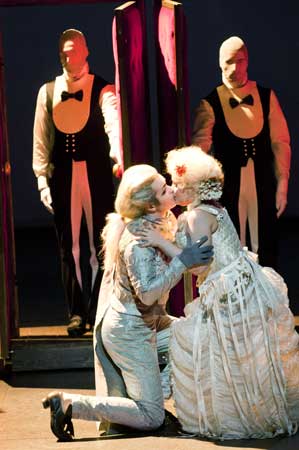
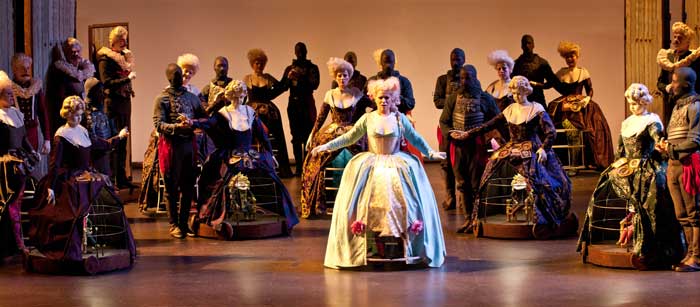
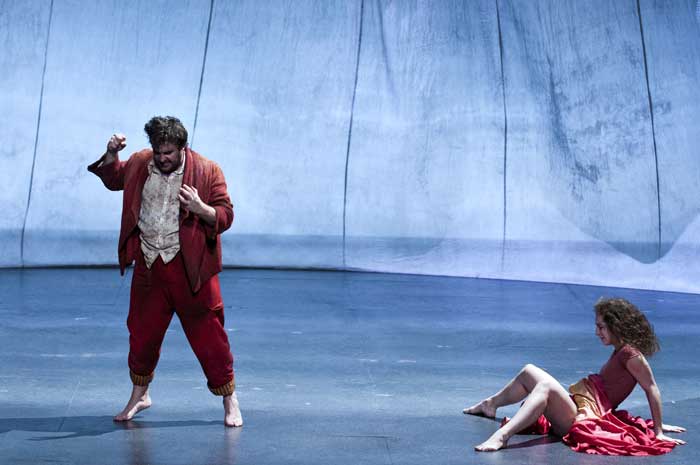
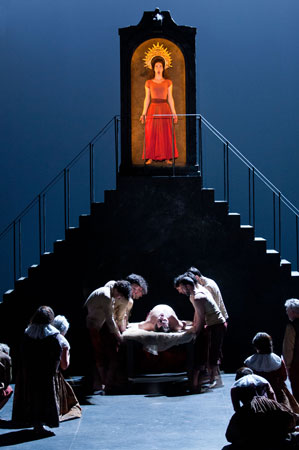
This was a co-production with the Théâtre Royal de la Monnaie, Brussels. The Donizetti Society treasurer, Alan Jackson, saw the production and has provided the following comments. This was a very welcome and rare opportunity to see a pivotal work in the history of 19th century opera: La Muette de Portici is considered to be the first French Grand Opéra. It contains scenes of impressive drama and power, and also a series of memorable tunes. It demands fine singing, which it more than received from Michael Spyres as the hero, Masaniello, lyrical and forceful in turn. His lullaby in Act 4 was lesson in moving a voice through its registers to maintain a gentle legato right up to top B (even top C in his cadenza). The other principals were less impressive: Elise Gutiérrez, though in command of the coloratura, sounded cloudy to me, and Maxim Mironov as Alphonse (the second tenor part) was simply too small-scale. The opera is famous in that Fenella, the dumb girl of the title, is a role for a dancer. Here we had an actress - there are early precedents for this - Elena Borgogni, who together with the director, Emma Dante, made her into a wild creature, a cross between Carmen and Elektra (see the photos)! With the aristocratic couple, Elvire and Alphonse, portrayed as over-powdered dolls, I didn’t find any sort of relationship possible between Fenella and Elvire, which undermined the dramatic credibility of much of the opera. There seemed to be a desire to produce something strong, shocking even; when a group of soldiers is disarmed in the uprising, they are disrobed as well - totally. They were played by a movement troupe who took on much of the demand for ballet, whether as fishermen or soldiers. Sets were fairly minimal, and the final coup de theatre, the eruption of Vesuvius, was replaced by Fenella’s enshrinement. Clearly much effort had gone into the production, and both Dante and Borgogni are obviously highly talented, but I felt the characterisation of Fenella misconceived; some moderation would have proved more convincing. Nonetheless, an absorbing evening which left me curious to see more Auber operas staged.
The Team
Fenella - Elena Borgogni Alphonse - Maxim Mironov Elvire - Eglise Gutiérrez Masaniello - Michael Spyres Pietro - Laurent Alvaro Borella - Tomislav Lavoie Selva - Jean Teitgen Lorenzo - Martial Defontaine
Direction musicale - Patrick Davin Mise en scène - Emma Dante Décors - Carmine Maringola Décors et costumes - Vanessa Sannino Lumières - Dominique Bruguière Collaboration aux mouvements - Sandro Maria Campagna
Orchestre et choeur du Théâtre Royal de la Monnaie
Fenella
Masaniello
Part of the chorus
Alphonse and Elvire
Alphonse and Elvire
Elvire
Masaniello and Fenella
The enshrinement |
|
|
|
|
|
|
| © Donizetti Society and contributors, 2004-2012 |