|
|
|
|
|
|
|
|
|
|
Donizetti's Enrico di BorgognaVadstena Academy, Sweden, July 20 - August 5, 2012.Photographs by Markus Gårder, courtesy of Vadstena Academy.
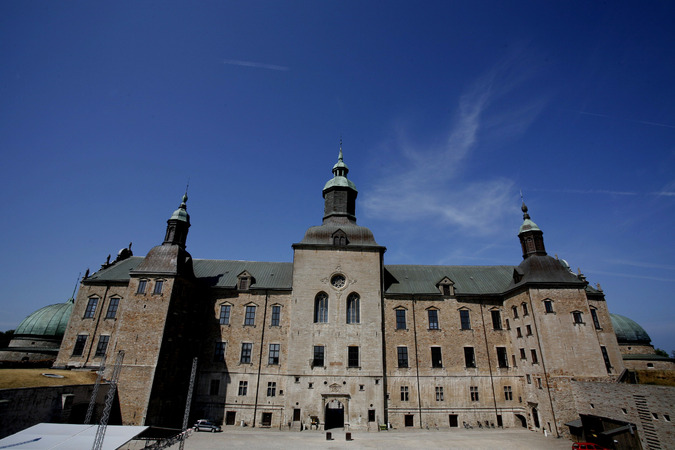
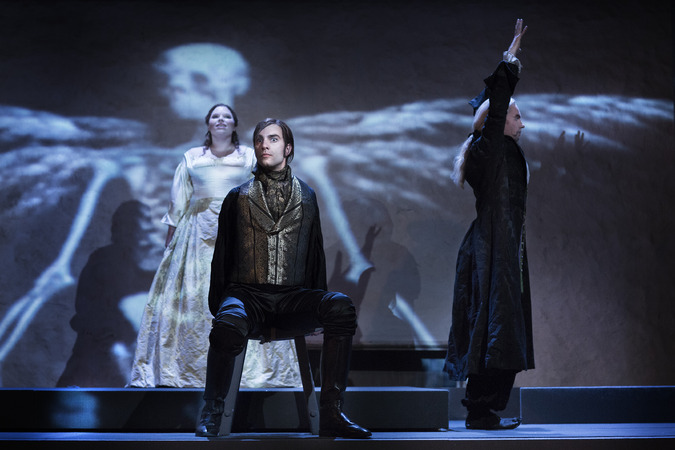
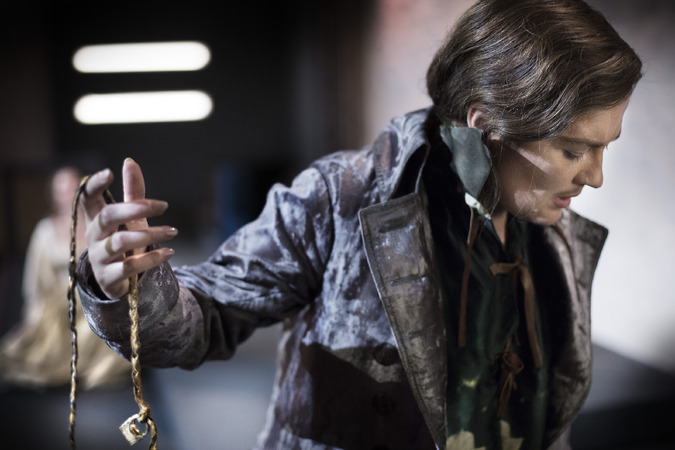
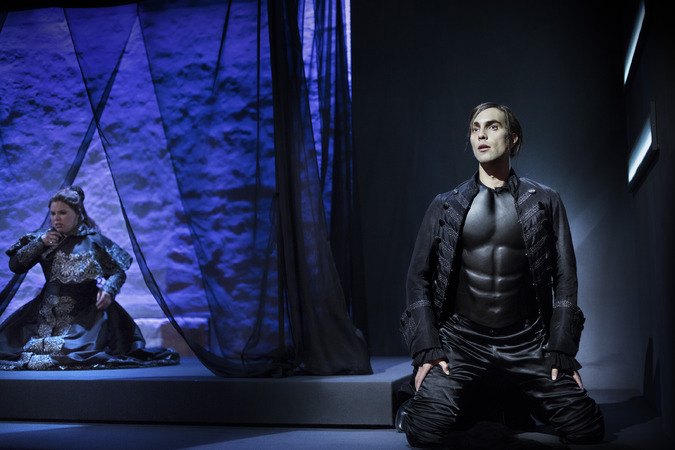
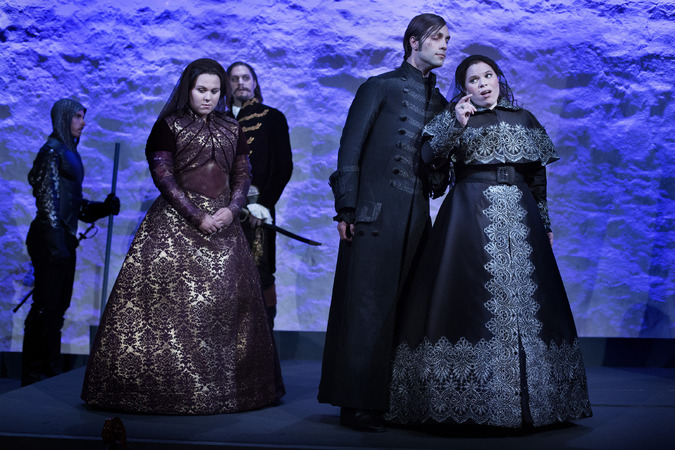
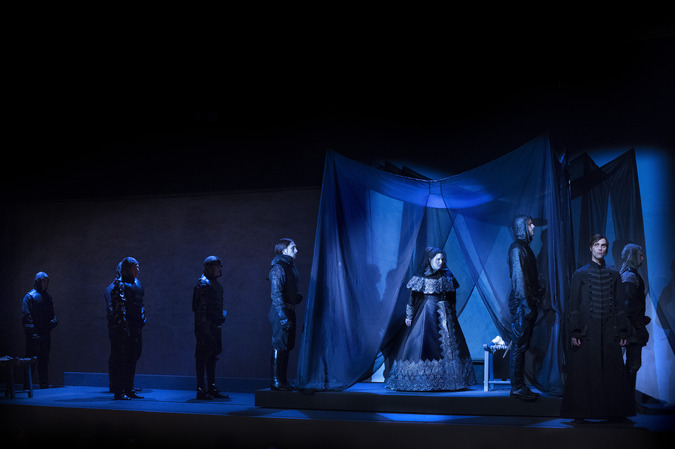
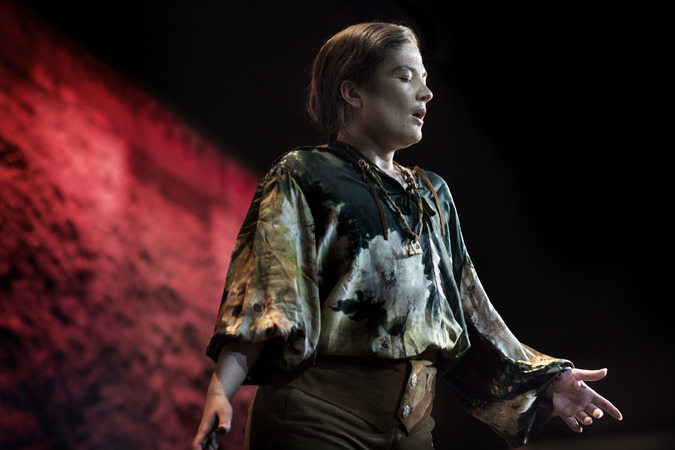
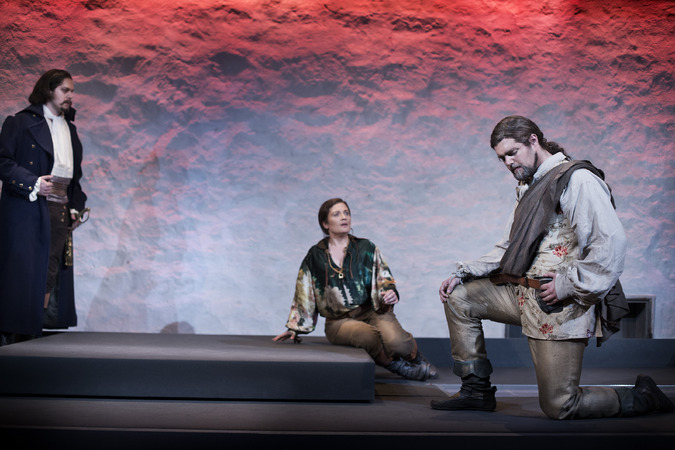
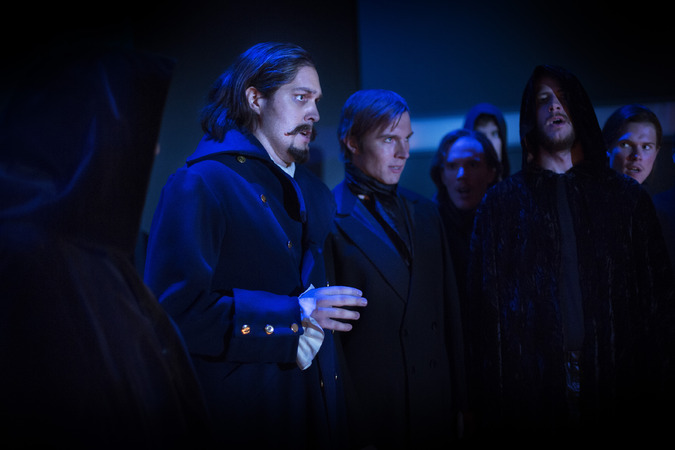
Vadstena Academy staged the first performance of Donizetti's Enrico di Borgogna in modern times. Alan Jackson has provided the following commentary following his visit on August 3, 2012. The first performance of Donizetti’s first opera took place in Venice in 1818. The Vadstena Academy’s performances this summer marked its first revival, thanks to Anders Wiklund’s work in producing a performing edition using an incomplete score in the Bibliothèque Nationale in Paris and a thankfully complete score more recently discovered in the Royal Library in Copenhagen. Both of these are manuscript copies; the autograph seems lost. The Vadstena Academy is one of Sweden’s foremost centres of continuing education for opera singers and musicians. A UK equivalent would perhaps be the opera course at Guildhall School of Music and Drama or British Youth Opera, though the programme biography for mezzo-soprano Dinga Dobay who took the title role reveals a somewhat more advanced career. The Academy’s repertoire policy is to study and perform a newly written work and an old work that has not been performed in modern times. Past students include Anne-Sofie von Otter, Hillevi Martinpelto, Camilla Tilling and Nina Stemme (to name a few that are familiar to me). I found Enrico attractive to listen to, fascinating even, as one tries to identify the influences at that very early stage of his career. Given that Mayr was Donizetti’s first teacher, it seems reasonable to describe the music of Enrico as Mayrian with Rossinian flavourings - the Rossini of Tancredi and the comedies such as La Cenerentola which Donizetti would have heard in Bergamo in 1818. Typical Donizetti lyricism is still a few years ahead. The vocal writing is florid, as one would expect, and most of it was capably managed by the cast, including the men. But pre-eminent were the two leading ladies, Rebecca Rasmussen as Elisa (even though illness led to some cuts in her music at the performance I attended) and especially Kinga Dobay in the virtuosic title role, a trouser part. The orchestra of period instruments was admirably conducted by Olof Boman. The production by Clara Svärd was straight-forward, props were limited but apt, costumes were historical, and thankfully army fatigues and machine guns were nowhere to be seen. The best known moment is probably the opening of Enrico’s Act I cabaletta. Donizetti re-used the theme in Anna Bolena’s mad scene, though I wonder how conscious this was. All in all, a fascinating and enjoyable evening. Congratulations to Vadstena for exhuming Enrico; it deserves not to wait another 194 years for its next revival.
The Team
Enrico - Kinga Dobay Pietro - Markus Pettersson Elisa - Rebecca Rasmussen Guido - Thomas Volle Gilberto - Christian Oldenburg Brunone - Ludvig Lindström Nicola - Peter Nyqvist Geltrude - Christina Nilsson
Conductor: Olof Boman Director: Clara Svärd Stage design: Clive Leaver Costumes: Anna Kjellsdotter Lighting designer: Jimmy Ström Mask design: Katrin Wahlberg
Elisa, Guido and Gilberto.
Enrico.
Elisa, Guido
Geltrude, Brunone, Guido, Elisa and chorus
Enrico, Elisa, Guido and chorus
Enrico
Brunone, Enrico and Pietro
Brunone, Guido, Nicola, Pietro and chorus Top |
|
|
|
|
|
|
| © Donizetti Society and contributors, 2004-2012 |